
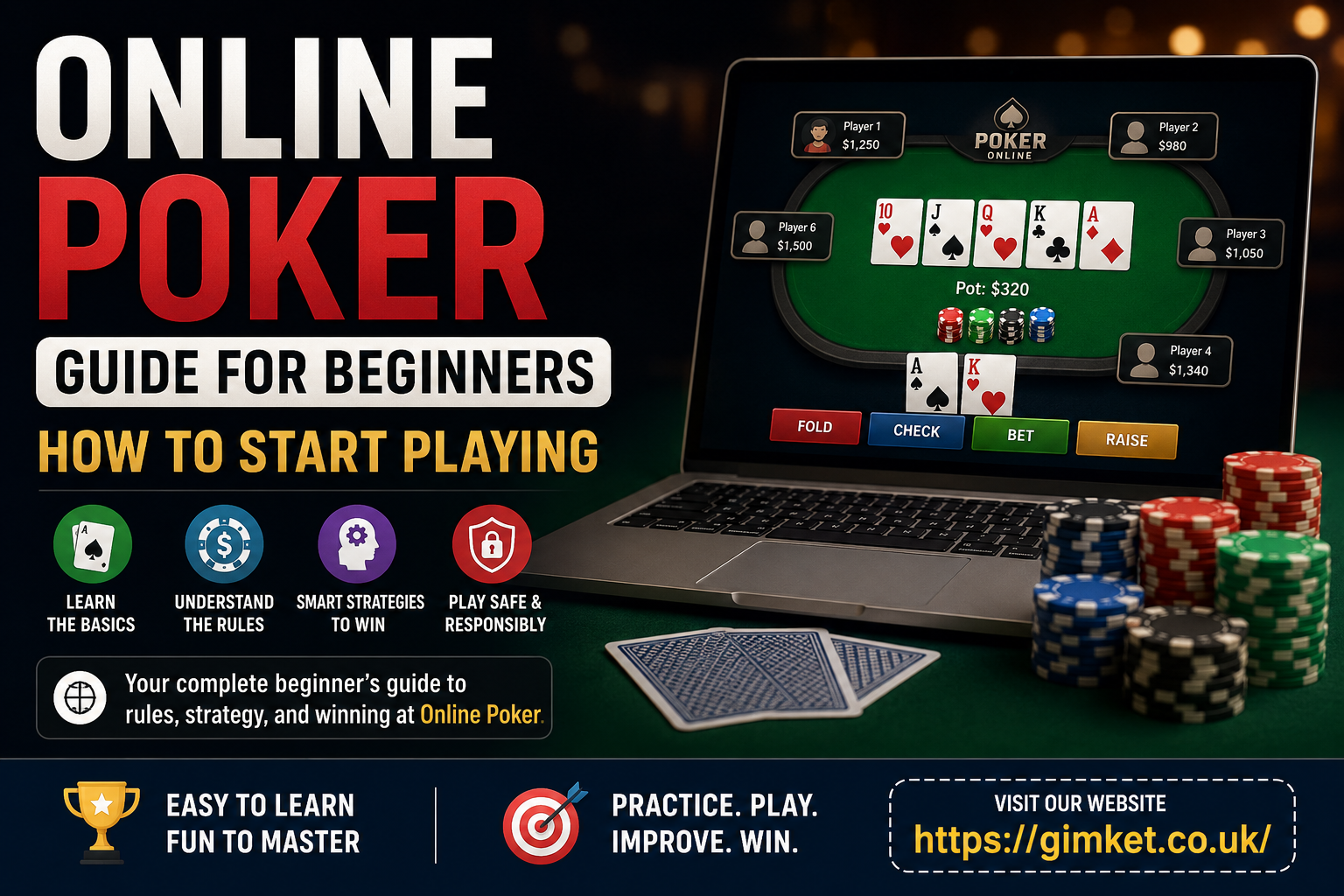
Online Poker has become one of the world’s most popular card games, allowing players to compete from the comfort of their homes at any time of the day. Whether you’re looking to play for fun, improve your strategic thinking, or eventually compete in real-money games, learning the basics is the first step toward becoming a confident player.
Unlike games that rely purely on luck, poker combines probability, psychology, decision-making, and discipline. Beginners often feel overwhelmed by unfamiliar terms, betting rounds, and hand rankings, but the learning curve becomes much easier with the right guidance.
What Is Online Poker?
Online Poker is the digital version of the classic card game played through websites and mobile applications. Players compete against one another rather than against the house, making it a game of skill mixed with an element of chance.
Most online poker platforms offer:
- Cash games
- Sit & Go tournaments
- Multi-table tournaments
- Free-play games
- Practice tables
Many beginners start with free games before progressing to real-money tables.
Why Online Poker Is So Popular
Several factors have contributed to the growing popularity of Online Poker:
- Available 24/7
- Accessible from computers and mobile devices
- Wide variety of game formats
- Games for every budget
- Opportunity to improve through practice
- Global player community
These advantages make Online Poker an attractive choice for both casual players and serious competitors.
Understanding Poker Hand Rankings
Before playing, you must know which hands are strongest.
| Rank | Poker Hand | Example |
|---|---|---|
| 1 | Royal Flush | A-K-Q-J-10 (same suit) |
| 2 | Straight Flush | Five consecutive cards, same suit |
| 3 | Four of a Kind | Four Kings |
| 4 | Full House | Three Queens + Two Tens |
| 5 | Flush | Five cards of the same suit |
| 6 | Straight | Five consecutive cards |
| 7 | Three of a Kind | Three Eights |
| 8 | Two Pair | Two Jacks + Two Fours |
| 9 | One Pair | Two Aces |
| 10 | High Card | Highest individual card |
Memorizing these rankings is essential because every decision depends on understanding the strength of your hand.
The Basic Rules of Online Poker
Although there are several poker variants, most follow the same general structure.
Players Receive Cards
Each player is dealt private cards, commonly known as hole cards.
Betting Begins
Players decide whether to:
- Fold
- Check
- Call
- Bet
- Raise
Community Cards Are Dealt
In Texas Hold’em, five community cards are revealed over multiple betting rounds.
Showdown
Players remaining after the final betting round reveal their cards, and the strongest five-card hand wins the pot.
Betting Rounds Explained
Texas Hold’em includes four betting rounds.
Pre-Flop
Players act after receiving two private cards.
Flop
Three community cards are revealed.
Turn
A fourth community card is dealt.
River
The fifth and final community card appears.
Each betting round gives players more information before making decisions.
Popular Types of Online Poker
Texas Hold’em
The most popular poker variation worldwide.
Ideal for:
- Beginners
- Casual players
- Tournament enthusiasts
Omaha
Players receive four private cards instead of two.
This creates:
- More possible hand combinations
- Bigger pots
- Increased complexity
Seven-Card Stud
Unlike Hold’em, there are no community cards.
Players receive seven cards throughout the hand and make the best five-card combination.
Five-Card Draw
One of the easiest poker games for beginners.
Players may replace unwanted cards after the initial deal.
Choosing the Right Game as a Beginner
Not every poker game is equally suitable for new players.
| Game Type | Difficulty | Recommended for Beginners |
|---|---|---|
| Texas Hold’em | Easy | Yes |
| Five-Card Draw | Easy | Yes |
| Omaha | Medium | After learning Hold’em |
| Seven-Card Stud | Medium | Later |
Texas Hold’em remains the best starting point because of its popularity and abundance of learning resources.
Essential Poker Terminology
Learning common poker terms helps you understand gameplay faster.
| Term | Meaning |
|---|---|
| Blinds | Forced bets before cards are dealt |
| Pot | Total chips being contested |
| Fold | Give up your hand |
| Call | Match the current bet |
| Raise | Increase the current bet |
| Check | Pass the action without betting |
| All-In | Bet all remaining chips |
| Showdown | Reveal cards to determine the winner |
Beginner Strategy Tips
Winning at Online Poker requires patience and good decision-making.
Play Fewer Hands
Many beginners play too many starting hands.
Focus on stronger hands such as:
- AA
- KK
- AK
- AQ
- JJ
Strong starting hands generally produce better long-term results.
Play in Position
Your position at the table matters.
Players acting later have more information because they see opponents’ actions first.
Late position often provides a strategic advantage.
Observe Your Opponents
Pay attention to:
- Betting patterns
- Frequency of raises
- Bluffing tendencies
- Aggressive or passive play
Observation is one of the most valuable skills in poker.
Don’t Chase Every Draw
Drawing hands can be exciting, but calling large bets with poor odds often leads to unnecessary losses.
Think carefully before continuing with a weak draw.
Bankroll Management
One of the biggest mistakes beginners make is risking too much money.
A simple bankroll strategy includes:
- Set a dedicated poker budget.
- Never play with money needed for essential expenses.
- Avoid trying to recover losses immediately.
- Move to higher stakes only after consistent success.
Proper bankroll management helps reduce risk and supports long-term improvement.
Common Mistakes Beginners Should Avoid
Playing Every Hand
Patience is a key part of successful poker.
Ignoring Position
Late position generally allows for more informed decisions.
Bluffing Too Often
Effective bluffing depends on timing, table dynamics, and opponent behavior. Beginners should use it sparingly rather than relying on it as a primary strategy.
Letting Emotions Take Over
Avoid making impulsive decisions after losing a hand. Staying calm and making logical choices is more likely to produce consistent results over time.
Skipping Practice
The best players continue learning and reviewing their gameplay.
How to Practice Online Poker
There are several effective ways to improve.
- Play free practice games.
- Review your previous hands.
- Learn one strategy at a time.
- Watch experienced players.
- Read beginner strategy guides.
- Practice regularly.
Consistent practice is more valuable than playing long sessions occasionally.
Online Poker Etiquette
Respectful behavior creates a better experience for everyone.
Good etiquette includes:
- Acting within the time limit.
- Avoiding abusive language.
- Respecting opponents.
- Following platform rules.
- Playing fairly.
Sportsmanship is an important part of any competitive game.
Staying Safe While Playing Online
Security should always be a priority.
Before creating an account, consider whether the platform:
- Uses encrypted connections.
- Has a clear privacy policy.
- Offers secure payment methods where applicable.
- Provides responsible gaming tools.
- Explains its terms and conditions clearly.
You should also use strong passwords, enable two-factor authentication if available, and never share your account credentials.
Is Online Poker Mostly Skill or Luck?
Luck influences the outcome of individual hands because of the random card distribution. However, over a large number of hands, skill becomes increasingly important. Experienced players generally make better decisions about starting hands, betting, position, and bankroll management, Online Poker which can lead to more consistent results over time.
How Long Does It Take to Learn?
Most beginners can understand the basic rules and hand rankings within a few hours.
Developing consistent decision-making and strategic thinking, however, takes much longer. Improvement comes from:
- Regular practice
- Studying hand histories
- Learning probability and odds
- Reviewing mistakes
- Playing within your limits
Patience and continuous learning are essential for long-term success.
Frequently Asked Questions
1. What is the best Online Poker game for beginners?
Texas Hold’em is widely considered the best starting point because its rules are straightforward, it is the most popular variant, and there are abundant learning resources.
2. Can I play Online Poker for free?
Yes. Many poker platforms offer free-play tables and practice games that allow beginners to learn the rules without risking real money.
3. Is Online Poker based entirely on luck?
No. While luck affects individual hands, skill plays a significant role over the long term through better strategy, decision-making, and bankroll management.
4. How much money should beginners start with?
If you choose to play real-money games where legally permitted, start with an amount you can comfortably afford to lose and keep it separate from your everyday finances.
5. What is the biggest mistake new players make?
Playing too many weak starting hands is one of the most common beginner mistakes and often leads to unnecessary losses.
6. How can I improve my poker skills?
Practice regularly, study basic strategy, review your previous hands, learn from experienced players, and focus on making consistent, well-reasoned decisions.
7. What equipment do I need to play Online Poker?
A stable internet connection, a computer or mobile device, and an account with a reputable poker platform are typically all you need to get started.
Conclusion
Online Poker is a rewarding game that combines strategy, mathematics, observation, and discipline. Although beginners may find the rules intimidating at first, mastering the fundamentals—such as hand rankings, betting rounds, table position, and bankroll management—creates a strong foundation for long-term improvement.
Start by practicing in free games, focus on making thoughtful decisions rather than chasing quick wins, and continue learning from each session. With patience, consistent practice, and responsible play, you can steadily build your confidence and develop the skills needed to enjoy Online Poker for years to come.