
If you’ve spent time around poker tables or online poker rooms, you may have come across the term Big O and wondered what it actually means. While it sounds informal, Big O is a well-established poker variant that has grown in popularity among both casual and experienced players.
Understanding Big O is important if you want to expand beyond traditional Texas Hold’em or even standard Omaha. It introduces more cards, more possibilities, and a deeper strategic layer that can be both exciting and challenging.
What Does Big O Mean in Poker?
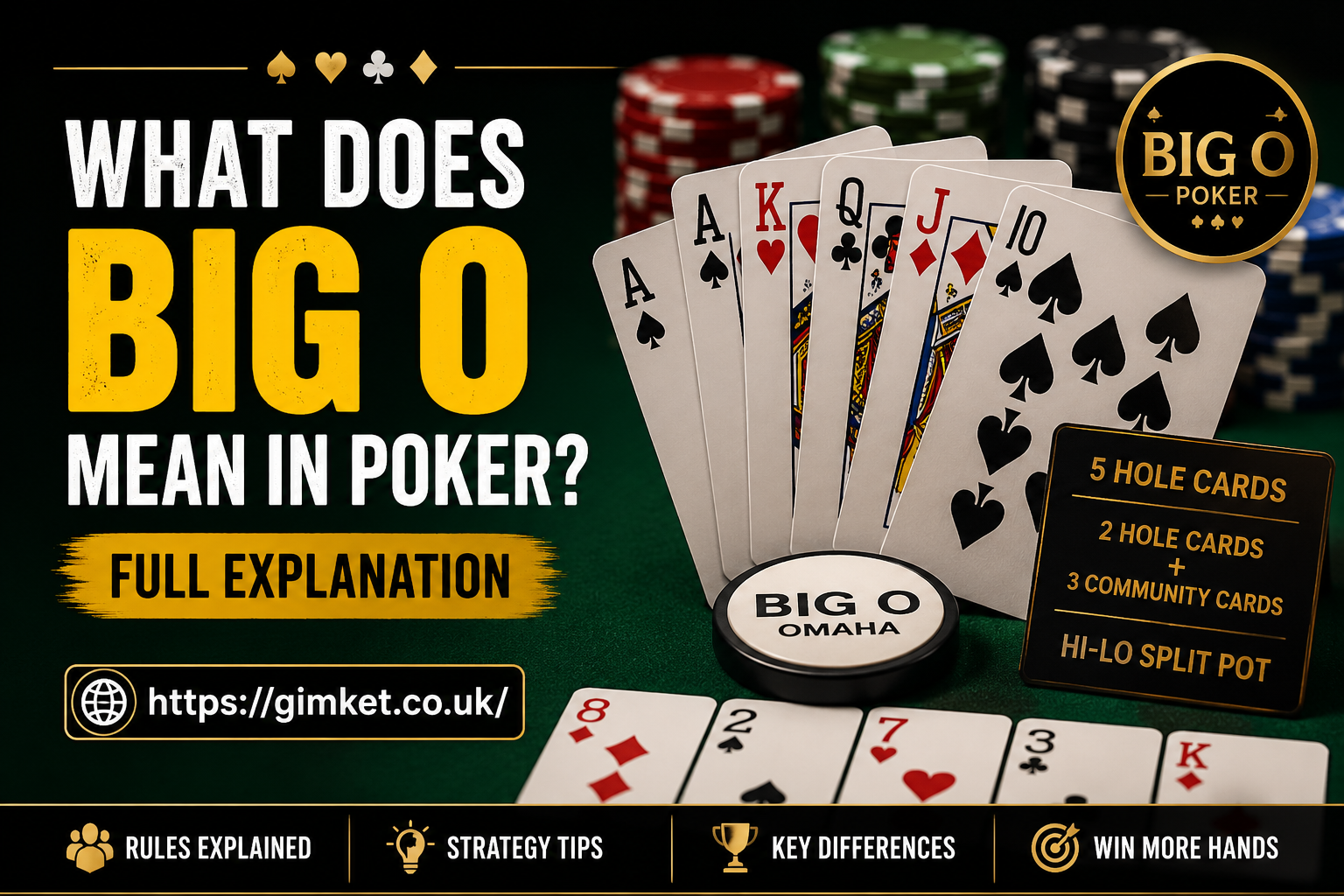
In poker, Big O refers to a variant of Omaha poker where each player is dealt five hole cards instead of four. The name “Big O” comes from the idea that it is a “bigger” version of Omaha—more cards, more action, and bigger pots.
Most commonly, Big O is played as Omaha Hi-Lo (also called Omaha 8 or better). This means the pot is split between:
- The best high hand
- The best qualifying low hand (if one exists)
Because of the extra card, Big O creates more possible hand combinations, making it a more dynamic and strategic game.
How Big O Poker Works
Basic Rules
The structure of Big O follows standard Omaha rules with one key difference: five hole cards instead of four.
Here’s how a typical hand plays out:
- Each player receives five private cards.
- Five community cards are dealt face-up on the table:
- The flop (3 cards)
- The turn (1 card)
- The river (1 card)
- Players must use:
- Exactly two of their hole cards
- Exactly three community cards
- The best hand (or hands) wins the pot.
High-Low Split Format
In most Big O games, the pot is divided between:
- High hand: The strongest traditional poker hand
- Low hand: The best five-card hand with all cards ranked 8 or lower
Example:
- High hand: A flush or full house
- Low hand: A-2-3-4-5 (the best possible low, also called “the wheel”)
If no player qualifies for a low hand, the entire pot goes to the high hand.
Big O vs Omaha: Key Differences
Understanding how Big O differs from standard Omaha helps clarify its meaning and appeal.
| Feature | Omaha | Big O |
|---|---|---|
| Hole Cards | 4 cards | 5 cards |
| Complexity | Moderate | High |
| Hand Strength | Strong | Even stronger |
| Strategy Depth | Advanced | More advanced |
| Popular Format | Hi or Hi-Lo | Mostly Hi-Lo |
Why the Extra Card Matters
The fifth card significantly increases:
- The number of possible combinations
- The likelihood of strong hands
- The importance of reading opponents
As a result, Big O is often considered more action-packed and strategic than traditional Omaha.
Hand Selection in Big O
Because players receive five cards, it’s tempting to play many hands. However, discipline is crucial.
Strong Starting Hands
Look for hands that can win both halves of the pot:
- A-2 combinations (for low potential)
- Suited cards (for flush potential)
- Connected cards (for straights)
Example of a strong hand:
A♠ 2♦ 3♠ K♠ Q♥
- Low potential: A-2-3
- High potential: Flush or straight
Weak Hands to Avoid
- Hands with no coordination
- No low potential in Hi-Lo games
- Too many high cards without support
In Big O, playing weak hands can be costly because opponents often have very strong combinations.
Strategy Basics for Big O Poker
Aim for the “Nuts”
In Big O, second-best hands often lose. You should aim for the strongest possible hand (the “nuts”).
- Best high hand
- Best low hand
This reduces the risk of losing large pots.
Think About Both Halves of the Pot
Since most games are Hi-Lo, strong players aim to:
- Win both high and low (called “scooping”)
- Or at least secure one half consistently
Position Matters
Playing in a later position gives you:
- More information about opponents
- Better control over pot size
Be Careful with Draws
With so many cards in play, multiple players may be drawing to better hands than yours. Always consider:
- Whether your draw is the best possible
- Whether someone could already have a stronger hand
Why Big O Is So Popular
Big O has gained popularity in both live poker rooms and online platforms for several reasons:
More Action
With five cards, players connect with the board more often, leading to:
- Bigger pots
- More betting
- More excitement
Strategic Depth
Big O appeals to experienced players who enjoy:
- Complex decision-making
- Multi-way pots
- Advanced hand reading
Balanced Gameplay
The high-low structure allows:
- More players to stay involved in hands
- Opportunities to win even without the strongest high hand
Common Mistakes Beginners Make
Overplaying Hands
New players often assume more cards mean stronger hands. In reality:
- Many hands look good but are not coordinated
- Strong combinations still matter more than quantity
Ignoring the Low Hand
In Hi-Lo games, failing to consider the low can cost you:
- Half the pot
- Or even the entire pot
Chasing Weak Draws
Not all draws are worth pursuing. Focus on:
- Nut draws (best possible outcomes)
- Avoid second-best possibilities
Is Big O Poker Hard to Learn?
Big O is more complex than Texas Hold’em, but it’s not impossible to learn.
What Makes It Challenging
- More cards to evaluate
- More potential hand combinations
- Split-pot dynamics
What Makes It Learnable
- Familiar structure (similar to Omaha)
- Clear rules once understood
- Practice improves decision-making quickly
With time and experience, most players can become comfortable with the game.
Frequently Asked Questions
What does Big O stand for in poker?
Big O refers to a five-card version of Omaha poker, typically played as a high-low split game.
How many cards do you get in Big O?
Each player receives five hole cards, compared to four in standard Omaha.
Is Big O always a Hi-Lo game?
Most of the time, yes. Big O is commonly played as a Hi-Lo split game, though high-only versions exist.
What is the best starting hand in Big O?
Hands with A-2 combinations, suited cards, and connected ranks are considered strong because they can win both high and low.
Do you use all five cards in Big O?
No. You must use exactly two hole cards and three community cards to make your hand.
Is Big O harder than Omaha?
Yes, Big O is generally more complex due to the extra card and increased number of possible combinations.
Can beginners play Big O poker?
Yes, but beginners should start with low-stakes games and focus on learning hand selection and strategy.
Conclusion
So, what does Big O mean in poker? Simply put, it’s a more advanced and action-packed version of Omaha that uses five hole cards and often features a high-low split pot. The extra card adds depth, excitement, and complexity, making it a favorite among players who enjoy strategic gameplay.
While Big O can feel overwhelming at first, understanding its rules and core strategies makes it much more approachable. By focusing on strong starting hands, aiming for the best possible combinations, and thinking about both halves of the pot, you can quickly improve your confidence and performance.