
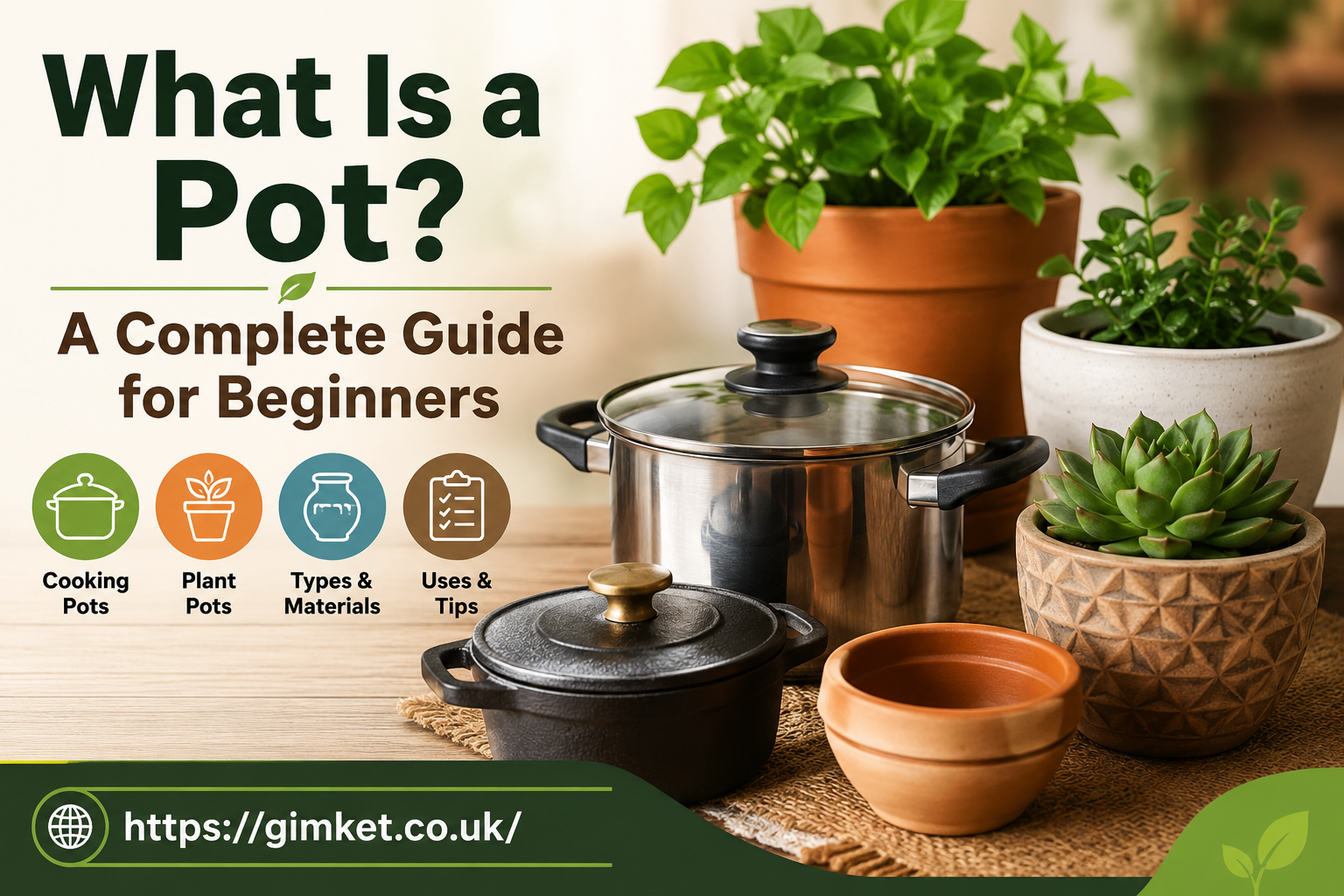
A pot is one of the most common and useful objects found in homes, gardens, kitchens, and workplaces. Although the word may seem simple, a pot can refer to many different things depending on its purpose. From cooking meals and growing plants to storing items and supporting everyday activities, pots have played an important role in human life for thousands of years.
Understanding what a pot is, how different types work, and how to choose the right one can help you make better decisions whether you are buying cookware, starting a garden, or simply learning about everyday household items.
What Is a Pot?
A pot is a container that usually has a rounded or deep shape and is designed for practical purposes. The exact meaning of a pot depends on the context in which it is used.
In everyday life, people commonly use the word “pot” to describe:
- A cooking vessel used for boiling, simmering, or preparing food.
- A container used for growing plants.
- A storage container for different materials.
- A decorative object used in homes and outdoor spaces.
The basic purpose of a pot is to hold something safely while making it easier to use, transport, or maintain.
Historically, pots were made from natural materials such as clay and stone. Ancient civilizations used pottery pots for cooking, storing grains, and carrying water. Over time, designs evolved, and modern pots are now available in materials that offer improved durability, convenience, and performance.
Different Types of Pots and Their Uses
Pot are available in many forms because different tasks require different designs. Choosing the right type can improve results and make daily activities easier.
| Type of Pot | Common Use |
|---|---|
| Cooking Pot | Preparing soups, stews, pasta, and other meals |
| Plant Pot | Growing flowers, herbs, vegetables, and indoor plants |
| Clay Pot | Traditional cooking and natural plant growing |
| Ceramic Pot | Decorative purposes and cooking applications |
| Storage Pot | Keeping ingredients or household items organized |
| Garden Pot | Outdoor planting and landscaping |
Cooking Pots: Essential Kitchen Tools
One of the most common meanings of a Pot is a kitchen cooking vessel. Cooking pots are designed to handle heat and allow food to be prepared efficiently.
Common cooking pot types include:
Saucepan
A saucepan is a smaller pot usually used for heating sauces, making soups, boiling milk, or preparing smaller portions of food.
Stockpot
A stockpot is a large, deep pot designed for cooking large quantities of food. It is commonly used for:
- Soups
- Broths
- Pasta
- Large family meals
Dutch Oven
A Dutch oven is a heavy pot, often made from cast iron, that distributes heat evenly. It is useful for slow cooking, baking, and preparing hearty dishes.
Pressure Pot
A pressure pot uses steam pressure to cook food faster. It is commonly used for beans, meat, and dishes that require longer cooking times.
Plant Pots: Supporting Healthy Growth
A plant pot provides a controlled environment where plants can grow. It holds soil, supports roots, and allows gardeners to move plants when necessary.
Plant pots come in different sizes and materials, including:
- Terracotta pots
- Plastic pots
- Ceramic pots
- Wooden containers
- Metal planters
A good plant pot should provide:
- Enough space for root growth
- Proper drainage
- Suitable material for the plant type
- Protection from extreme weather conditions
For example, a small herb plant may grow well in a compact pot, while a tree or large indoor plant requires a much larger container.
Common Materials Used to Make Pots
The material of a pot affects its durability, appearance, maintenance, and performance.
Stainless Steel Pots
Stainless steel pots are popular in kitchens because they are:
- Strong and long-lasting
- Resistant to rust
- Easy to clean
- Suitable for everyday cooking
They are commonly used in professional and home kitchens.
Cast Iron Pots
Cast iron pots are known for excellent heat retention. They are ideal for slow cooking because they maintain steady temperatures for longer periods.
Advantages include:
- High durability
- Even heat distribution
- Long lifespan with proper care
Clay Pots
Clay pots have been used for centuries. They offer a traditional cooking experience and are also popular for gardening.
Benefits include:
- Natural appearance
- Good airflow for plant roots
- Traditional cooking qualities
However, clay pots can be fragile and may require careful handling.
Ceramic Pots
Ceramic pots are valued for their attractive designs and smooth finishes. They are often used for decorative plants and certain cooking purposes.
Plastic Pots
Plastic pots are lightweight, affordable, and easy to move. They are widely used for gardening because they come in many sizes and designs.
How to Choose the Right Pot
Selecting the best pot depends on what you plan to use it for. A pot that works well for cooking may not be suitable for gardening.
Consider these factors before buying:
1. Purpose
First, decide why you need the pot.
Ask yourself:
- Is it for cooking?
- Is it for a plant?
- Is it for storage?
- Is it decorative?
The purpose determines the best design and material.
2. Size
The size of a pot affects how effectively it performs.
For cooking:
- Small pots work well for sauces and small portions.
- Medium pots are suitable for everyday meals.
- Large pots are useful for families and batch cooking.
For gardening:
- Small plants need smaller pots.
- Larger plants require deeper containers with more space for roots.
3. Material Quality
Different materials offer different benefits.
| Material | Best For | Main Advantage |
|---|---|---|
| Stainless Steel | Cooking | Durable and easy to maintain |
| Clay | Gardening and traditional cooking | Natural properties |
| Cast Iron | Slow cooking | Excellent heat retention |
| Plastic | Gardening | Lightweight and affordable |
| Ceramic | Decoration and plants | Attractive appearance |
4. Maintenance Requirements
Some pots require more care than others.
For example:
- Cast iron pots need proper seasoning and drying.
- Clay pots should be handled carefully.
- Stainless steel pots are easier to maintain.
Choosing a pot that matches your lifestyle can save time and effort.
How to Care for a Pot
Proper care helps a Pot last longer and maintain its performance.
General maintenance tips include:
- Clean the pot after each use.
- Avoid using harsh cleaning methods on sensitive materials.
- Store pots in a dry place.
- Follow manufacturer instructions when available.
- Check for cracks, damage, or wear regularly.
For plant pots, proper care includes:
- Cleaning old soil buildup.
- Ensuring drainage holes remain clear.
- Replacing soil when needed.
- Choosing the right location for the plant.
The Importance of Choosing the Right Pot
A well-chosen pot can improve efficiency, safety, and results.
In cooking, the right pot helps with:
- Better heat control
- Improved cooking results
- Easier food preparation
In gardening, the right pot supports:
- Healthier root development
- Better water management
- Stronger plant growth
A suitable pot is not just a container; it is a tool designed to make a specific task easier and more effective.
Frequently Asked Questions
What is a pot used for?
A pot is used for many purposes, including cooking food, growing plants, storing items, and decoration. The exact use depends on the type and design of the pot.
What is the best material for a cooking pot?
The best material depends on your cooking needs. Stainless steel is durable and versatile, while cast iron is excellent for slow cooking and heat retention.
What size pot should I buy?
The ideal pot size depends on your purpose. Small pots work for individual portions, while larger pots are better for families, gardening, or bigger projects.
Are clay pots better for plants?
Clay pots can be beneficial for plants because they allow airflow and absorb excess moisture. However, they may require more frequent watering than plastic pots.
How long does a pot usually last?
The lifespan of a pot depends on its material, quality, and care. High-quality metal pots can last many years, while cheaper options may need replacement sooner.
Can the same pot be used for cooking and gardening?
Generally, cooking pots and plant pots are designed differently. It is best to use separate pots because they serve different purposes and require different features.
Why do pots have drainage holes?
Plant pots have drainage holes to allow excess water to escape. This helps prevent root damage caused by overwatering.
Conclusion
A pot is a simple but highly useful object with many applications in everyday life. Whether used for cooking delicious meals, growing healthy plants, or organizing household items, the right pot can make tasks easier and more efficient.
Understanding different pot types, materials, sizes, and care methods helps you choose a product that matches your specific needs. From traditional clay pots to modern stainless steel cookware, each type offers unique benefits.